
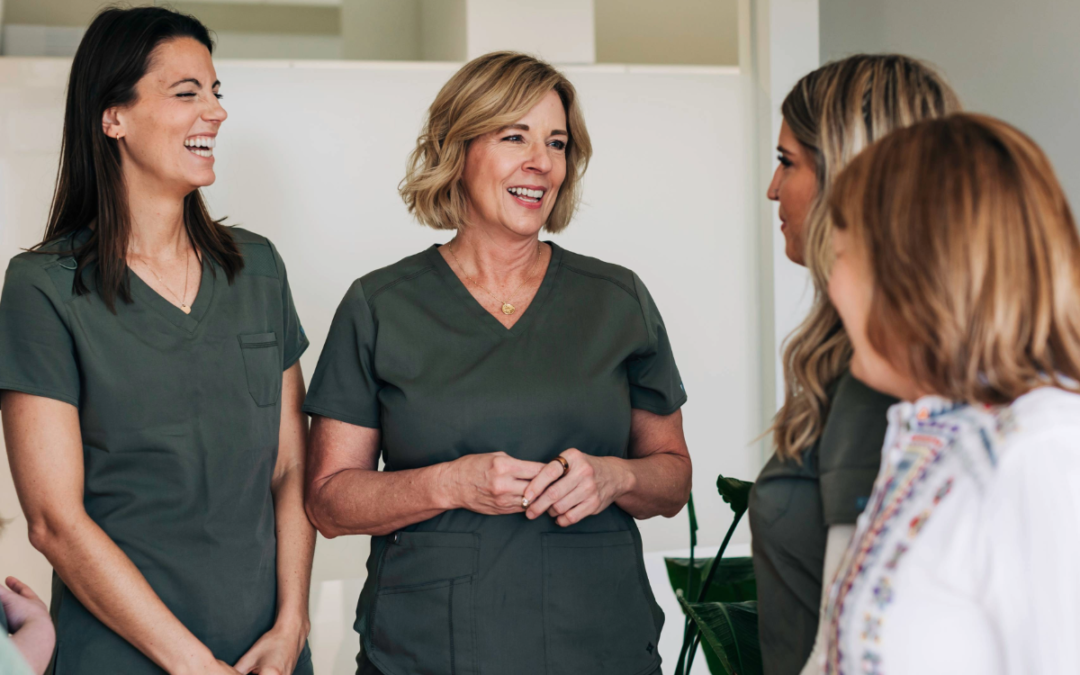

I am MDDS: Dr. Sharon Dickerson

Dr. Sharon Dickerson
Denver Holistic & Biological Dentistry
Growing up with a father in dentistry, you were introduced to the profession early. How did that foundation influence your career?
Witnessing my father as a dentist in my early years, what stayed with me most was not the procedures; it was the way he showed up for people. I watched him take time with patients, listen to their stories, and stay present with them through different seasons of their lives. There was a kind of quiet understanding that healing didn’t happen in isolation; it happened in relationships. Patients felt seen, and in many ways, that experience of being seen was part of their healing. That shaped me early on and stayed with me, that dentistry is as much about human connection as it is about clinical care.
You’ve shared that your path into biological dentistry was shaped by a personal health crisis early in your career. Can you walk us through how that experience transformed your approach to patient care?
Early in my career, I went through significant mercury toxicity that changed the way I understood my own body and, ultimately, my profession. It pushed me to look more deeply at how external factors and biological systems interact, and it opened my eyes to how complex and interconnected health really is. That experience became a turning point; it moved me toward biological dentistry.
How do traditional and biologic dentistry complement each other? How can dentists thoughtfully integrate both philosophies in practice?
I see traditional and biological dentistry as two parts of a much larger whole. Traditional dentistry gives us the strength of structure, function, and clinical reliability, while biological dentistry asks us to widen the lens and consider how our choices interact with the patient’s overall health and sensitivities. When those are brought together thoughtfully, it creates a comprehensive and holistic form of care. Integration is about staying grounded in excellent dentistry while remaining open to a broader understanding of impact.
Oral-systemic health continues to gain momentum across the profession. How has this connection shaped the way you diagnose, treatment plan and communicate with patients?
I no longer see the mouth as separate from the rest of the body, but as part of a larger physiological conversation that includes inflammation, immune response, function and structure over time. That perspective influences how I diagnose and sequence care, but just as importantly, it changes how I communicate. My goal is always to help patients understand their own health in a way that feels meaningful and accessible, so they can make informed decisions with confidence rather than uncertainty.
As a longtime member of organized dentistry, what value have you found in being part of MDDS, CDA and ADA?
MDDS, CDA, and ADA create a space where clinicians can stay engaged with evolving standards, share knowledge and contribute to the broader direction of the profession. I value that sense of community and the ability to remain connected to something larger than my own practice.
Looking back on nearly three decades in practice, what moments or patient outcomes have most reaffirmed your commitment to a holistic approach?
Some of the most meaningful moments happen after full completion of treatment, particularly in bioesthetic cases, when patients experience their final delivery and step into a new sense of balance in their bite, function and appearance. There is often an emotional response that is difficult to put into words. Patients describe feeling more aligned within themselves, more at ease in their bodies, and more confident in a way that feels unfamiliar but deeply right. What’s equally powerful is how often others around them notice a change in their presence or demeanor, something subtle but unmistakable. These moments feel less like isolated clinical outcomes and more like witnessing a person fully re-inhabit themselves in a new way. While we can describe structural and functional changes with precision, there remains something in these transformations that feel almost unexplainable in their depth.
As dentistry continues to evolve, what excites you most about the future, particularly in regard to oral health and overall wellness?
What excites me most is the convergence of advancing technology with a more integrated understanding of health. We now have tools that allow us to be far more precise in diagnosis, planning and execution, while also supporting more individualized and predictive approaches to care. There is also a growing awareness that oral health cannot be separated from overall well-being, and that dentistry plays a much larger role in that system than previously recognized. The future feels both highly innovative and more human-centered, and it is an exciting time to be in dentistry – learning from what has come before while also growing alongside a new generation of clinicians who are expanding what is possible.