

Staying Strong in Practice: Reducing Musculoskeletal Risks in Dentistry
By: Dr. Leslie Hovda
In the demanding world of dentistry, professionals often find themselves in awkward positions for extended periods of time, leading to a high risk of musculoskeletal disorders (MSDs). Common MSDs affecting dental providers include wrists, hands, neck, shoulders, and back,1 with 70% of dental students reporting back pain by their third year.2 These conditions are exacerbated by poor posture, repetitive motions and the physical demands of dental procedures. Fortunately, with some small changes to your practice, many of these risks can be reduced.
There are three main areas of practice that should be addressed when trying to feel your best at work. These are: equipment, positioning and prevention.
ERGONOMIC PRINCIPLES AND EQUIPMENT IN DENTISTRY
Ergonomic principles include proper instrument design (lightweight, appropriate grip/knurling, larger diameter, sharp), equipment use (stools, magnification aids, lighting) and positioning to reduce strain. Magnification loupes with ≥40° declination and proper lighting reduce eye fatigue and can even improve the quality of your work, in addition to the way you feel. Equipment adjustments can minimize awkward bending and force exertion, leading to less body fatigue. I’ll say it now and save you some money: there is no perfect stool that will solve all your back problems! Although if you have the same stools that you inherited with the practice 30 years ago, you may want to consider an update. It’s just as important to consider how you use the equipment you have as it is to have the proper equipment. You can sit too long in the best position and still have issues. The body is made to move.
WORK POSITIONS AND POSTURE OPTIMIZATION
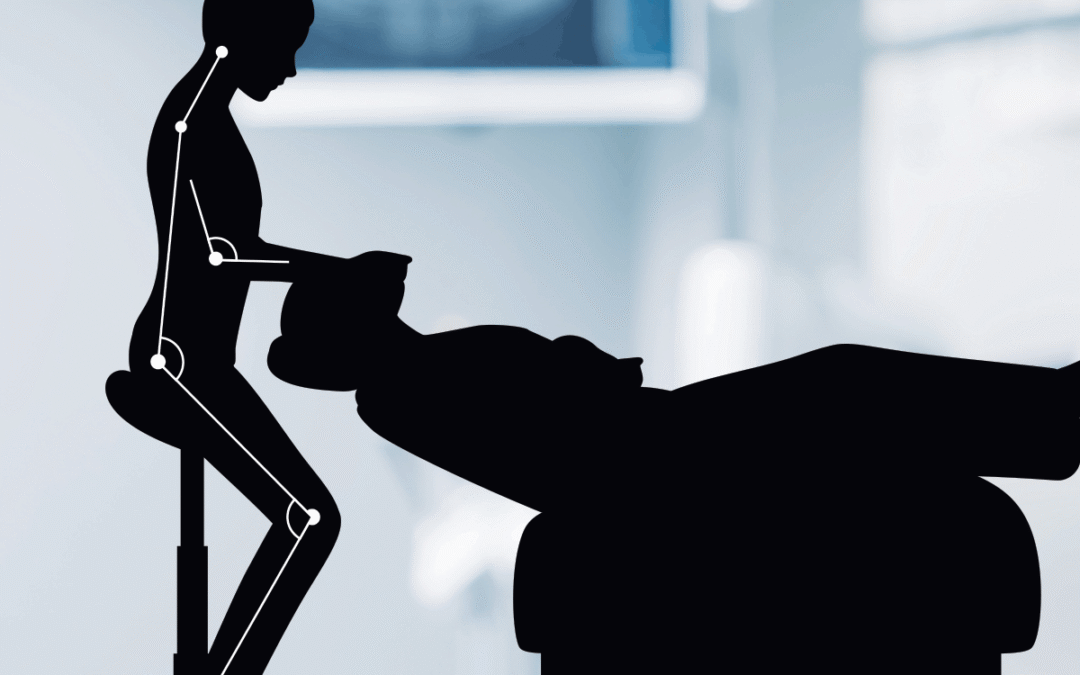
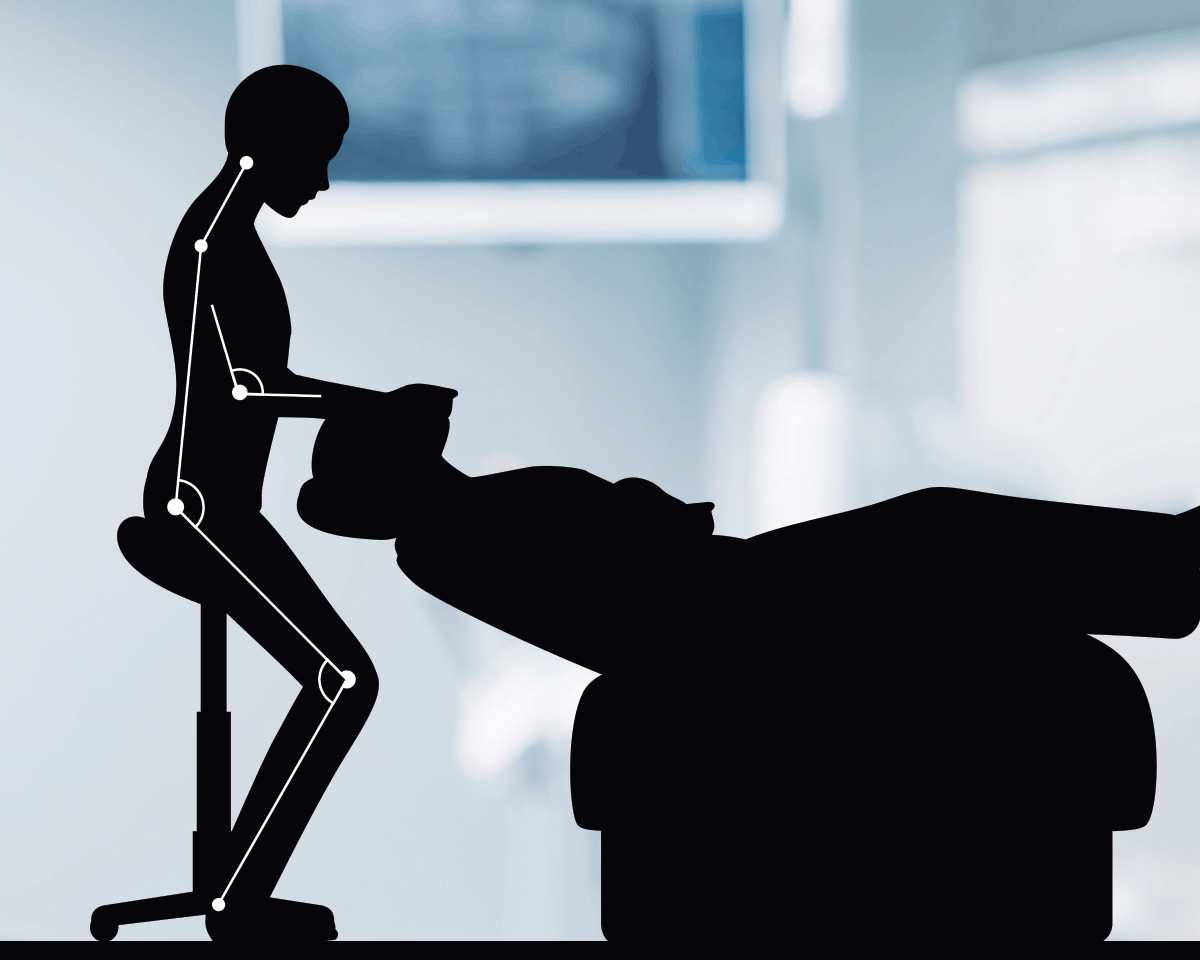
Optimal dental work posture involves a slight forward head incline, upright torso, relaxed arms, straight wrists and feet flat on the floor with hips slightly higher than knees. Alternating feet on the rheostat and working in the 12 o’clock position behind the patient’s head is recommended. Ideally, doing some treatment standing would significantly improve your positioning. Assistants should be seated higher and have a higher line of sight into the oral cavity than the dentist. This will require the use of stools with foot and arm support. Patient positioning should also be considered to provide the best view of the treatment area. Remember: the patient is only in your office for 45 minutes on average and you are there all day. Encourage the patient to comply with the best positioning for your work instead of contorting your body to accommodate them.
PREVENTION STRATEGIES AND SELF-CARE
Prevention includes recognizing pain signs (burning, tingling) and not ignoring them, implementing self-care exercises (stretching, strengthening), and lifestyle changes focusing on mental health, exercise, diet and sleep. I like to refer to it as taking your MEDS.
- Mindfulness/meditation to help with the stressors of caring for people,
- Exercise to keep yourself fit and offset the demands of your job,
- Diet of less bad stuff and more good stuff (stop adding fuel to the fire of inflammation),
- and good quality Sleep.
Regular in-office stretching during meetings and breaks enhances flexibility and reduces pain, supporting career longevity. By strengthening the muscles that oppose the positions commonly assumed during dental procedures, professionals can reduce the risk of injury and improve their physical resilience.
You know the saying, “an ounce of prevention…”. By incorporating ergonomic principles, optimizing posture, and adding regular exercise into their daily routines, dental professionals can protect their bodies, enhance their career longevity and improve their overall well-being.
REFERENCES
- Ayatollahi J, Ayatollahi F, Ardekani AM, Bahrololoomi R, Ayatollahi J, Ayatollahi A, Owlia MB. Occupational hazards to dental staff. Dent Res J (Isfahan). 2012 Jan;9(1):2-7
- Rising DW, Bennett BC, Hursh K, Plesh O. Reports of body pain in a dental student population. J Am Dent Assoc. 2005 Jan;136(1):81-6
Dr. Leslie Hovda is a Doctor of Physical Therapy, receiving her degree from the University of North Dakota in 2010. She holds two specialist certifications, being board-certified in Orthopedic Physical Therapy and a Certified Cervical and Temporomandibular Therapist.