


Your Tongue is Talking: Advancing Personalized Oral–Systemic Care Through Tongue Mapping
By: Lani McBeth, BS, RDH
Dentistry is undergoing a meaningful transformation. The movement from reactive, procedure-based care toward preventive, personalized and collaborative healthcare is no longer optional; it is essential. As oral health professionals, we are uniquely positioned to recognize early indicators of systemic imbalance, often before symptoms are identified elsewhere in the body. One of the most accessible and underutilized tools in this process is the tongue.
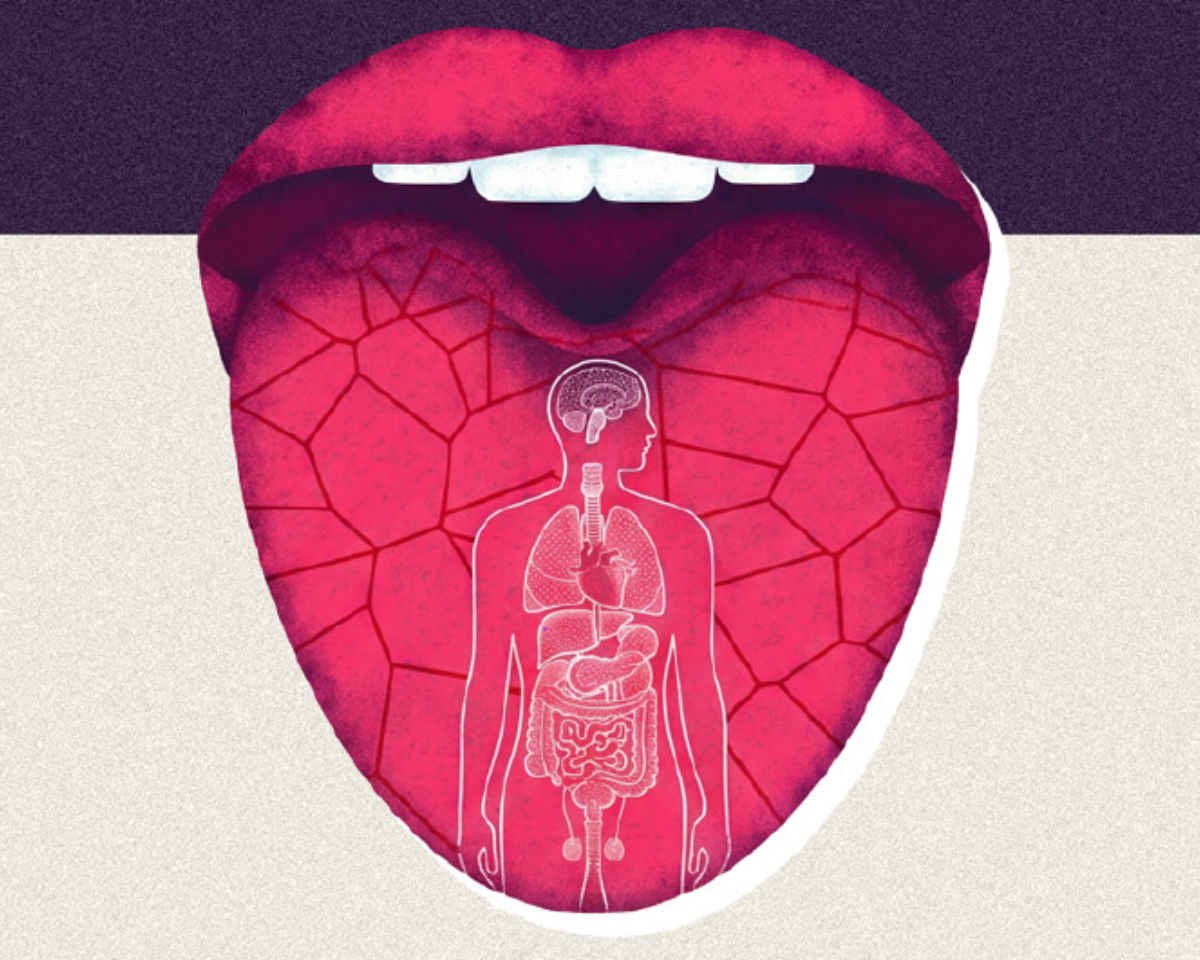
Systemic Tongue Mapping (STM), rooted in Traditional Chinese Medicine (TCM) and increasingly explored within modern integrative frameworks, offers a valuable lens through which clinicians can expand their assessment of oral–systemic health. By incorporating intentional observation of the tongue, providers can deepen clinical insight, enhance patient communication and support a more comprehensive model of care.
For centuries, TCM practitioners have used the tongue as a diagnostic guide, correlating specific regions with organ systems such as the heart, lungs, liver, spleen, kidneys and digestive tract. Clinical characteristics including color, coating, texture, moisture and morphology are evaluated as indicators of internal balance or dysfunction.
In Western dentistry, the tongue has traditionally been assessed primarily for pathology such as lesions, infection or malignancy. However, expanding this assessment to include broader observational patterns introduces an opportunity to connect oral findings with systemic considerations. For example:
- A thick or coated tongue may reflect microbial imbalance or gastrointestinal considerations
- A scalloped tongue may be associated with airway, parafunctional habits or nutritional deficiencies
- Erythema or localized inflammation may correlate with systemic inflammatory or stress-related patterns
While these observations are not diagnostic, they can serve as valuable prompts for further inquiry and patient education. This approach does not replace evidence-based practice, it enhances it by encouraging a more comprehensive clinical perspective.
Innovation in healthcare often begins with a willingness to reexamine what we see every day. When the tongue is viewed not solely as an anatomical structure, but as a dynamic reflection of internal health, the scope of dental care expands.
Former American Dental Association (ADA) president Dr. William Cole emphasized the importance of embracing change in healthcare, stating:
“Change is a good thing. It challenges us, it moves us forward and it creates space for innovation.”
Tongue mapping reflects this principle. It invites clinicians to move beyond compartmentalized care and toward a more integrative model, one that recognizes the interconnected nature of oral and systemic health.
A significant driver of this shift is the evolving expectation of patients themselves. Over the past decade, there has been a notable increase in demand for healthcare that is both personalized and integrative. As early as 2013, literature in integrative medicine highlighted a growing trend among Western populations seeking functional approaches to care models that prioritize root cause analysis, lifestyle factors, and whole-body health rather than isolated symptom management (Maizes, Rakel, & Niemiec, Integrative Medicine and Patient-Centered Care, 2013). This shift reflects a broader desire for healthcare that is collaborative, preventive and individualized.
Today’s patients are increasingly asking:
- How does my oral health relate to my overall health?
- What underlying factors may be contributing to inflammation or chronic conditions?
- What proactive steps can I take to improve long-term wellness?
These questions signal a change in expectations, one that dentistry is well-positioned to meet. STM provides a visual and clinically relevant entry point into these conversations. It allows patients to see and engage with their health in a tangible way, fostering greater awareness and participation in their care. This concept is explored more deeply in “Your Tongue Is Talking: How Systemic Tongue Mapping Unlocks the Path to Whole-Body Wellness,” which aims to support both clinicians and patients in understanding the language of the tongue as it relates to systemic health.
The integration of tongue assessment supports a more individualized approach to care. Each patient presents with a unique clinical picture, and subtle variations in tongue presentation can guide more tailored discussions and recommendations.
For instance:
- Observations of coating or dryness may prompt conversations about hydration, diet and oral microbiome balance
- Variations in color or texture may lead to exploration of nutritional status or systemic stress
Irregular patterns may support referrals or collaboration with other healthcare providers when appropriate
This approach aligns with the broader movement toward personalized medicine, where care is adapted to the individual rather than applied uniformly
across populations.
Importantly, STM enhances communication. It provides a visual framework that can help patients better understand the connection between oral findings and overall health, transforming the clinical interaction into a more collaborative experience.
Historically, dentistry and medicine have operated in parallel, with limited integration between disciplines. However, as the understanding of oral–systemic connections continue to grow, the need for collaboration becomes increasingly clear.
STM offers a practical way to support this integration. By recognizing patterns and initiating informed conversations, dental professionals can:
- Encourage patients to explore systemic factors with their medical providers
- Support interdisciplinary communication when appropriate
- Reinforce the role of oral health as an integral component of overall health
This is not about expanding scope beyond professional boundaries. It is about strengthening the role of dentistry within a more connected healthcare system. The future of dentistry is inherently connected to systemic health, early detection and preventive care. As emerging technologies such as salivary diagnostics and microbiome analysis continue to evolve, the integration of observational tools like systemic tongue mapping becomes even more relevant.
Tongue mapping is non-invasive, cost-effective and immediately applicable in clinical practice. More importantly, it aligns with the direction healthcare is moving toward personalization, prevention and patient engagement.
When patients are invited to observe and understand their own physiology, they become active participants in their health journey. This shift from passive recipient to engaged partner has the potential to improve outcomes and strengthen trust in the provider–patient relationship.
Subtle changes in the body often precede more significant health concerns. The tongue, readily visible and rich in clinical information, offers an opportunity to recognize these early signals.
Incorporating tongue mapping into practice is not about certainty; it is about curiosity, awareness and connection. It is about asking more informed questions and viewing oral health within the broader context of whole-body wellness. As the profession continues to evolve, embracing approaches that support integrative and personalized care will be essential. Tongue mapping represents one such opportunity grounded in observation, supported by patient interest and aligned with the future of healthcare.
The tongue whispers before it screams. The question is, are we ready to listen?
Lani McBeth, BS, RDH, is a dental hygienist with over 40 years of clinical experience and a certified biologic hygienist focused on oral–systemic health and early detection. She is the author of “Your Tongue Is Talking: How Systemic Tongue Mapping Unlocks the Path to Whole-Body Wellness,” and a national speaker on medical–dental integration. Lani champions the role of the dental professional as a PPCP: Preventive, Personal, Collaborative Care Provider, advancing a more personalized, proactive and connected model of care.