


Reimagining the Possible: What True Medical-Dental Integration Would Actually Require
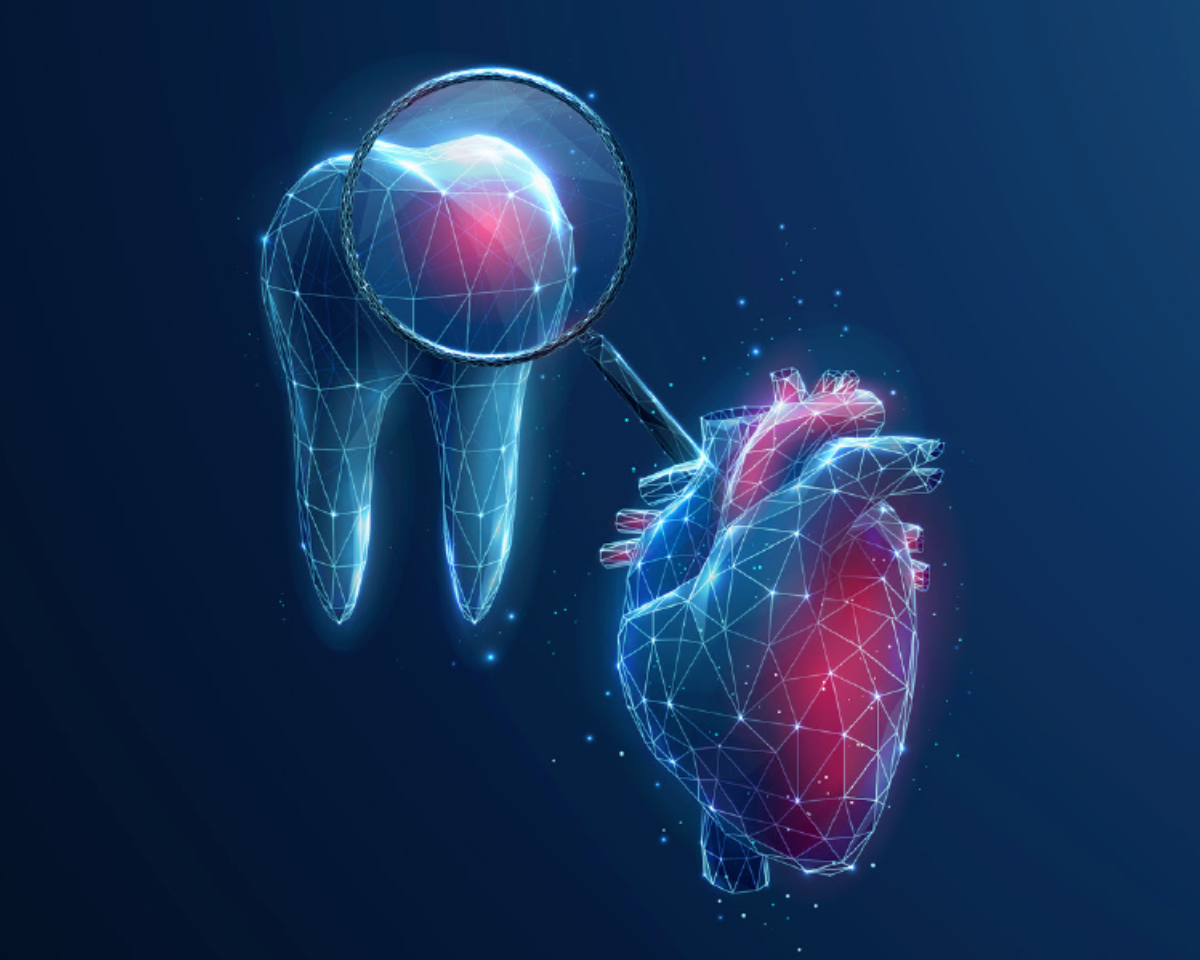
There is a moment from my general practice residency at Northwestern Memorial Hospital that I return to often. I saw a patient with life-threatening bacterial endocarditis affecting two of her heart valves, which put her into congestive heart failure, kidney failure, etc. She needed her infected heart valves replaced, but first, the surgical team needed someone to take care of her infected teeth. After a dental exam, I saw a periapical infection around tooth #3. After consulting with her medical team, I extracted the infected tooth. When I did, pus came out of the socket. My attending said, “Quick, Brett- culture that.” We did.
The bacteria in that socket were identical to the bacterial vegetations around her heart valves.
At that moment, everything I had been taught in dental school, that oral health is health, that the mouth is connected to the body, stopped being a concept and became real to me. And then I looked at the medical billing. Cardiology, nephrology, cardiothoracic surgery, internal medicine, anesthesia, in fact, every physician who cared for her got paid. Dentistry, which had just removed the source of the infection that would have killed this woman after her surgery, did not. That single patient experience has defined the conversation for me around medical-dental integration ever since. And it is a conversation we can no longer afford to have only in dental schools and professional conferences. True integration demands structural change in the way we think about oral disease, the way we pay for care and the way we design the systems that deliver it.
THE SCIENCE HAS NEVER BEEN THE PROBLEM
The evidence linking oral health to systemic disease is not new or fringe. A study published in Circulation, the flagship journal of cardiology, found that 78% of patients undergoing cardiac catheterization for blocked arteries had Streptococcus viridans in the arterial plaque.1 That bacterium lives in the oropharynx. It does not originate in the heart, nor should it be there. It got there from somewhere else, traveled through the bloodstream and contributed to the inflammatory cascade that narrowed those arteries. I presented this study to a room of 50 cardiologists at a symposium in the Southwest. Every one of them knew about the study, yet none of them had changed how they screened their patients for oral disease.
When I asked why, they gave a variety of answers: They received roughly one hour of oral health education in their entire medical training. When they look in the mouth (and few cardiologists ever do actually look in the mouth), they see teeth, a tongue and a throat. They could not recognize a draining fistula. They had no way to identify what I described as a “fountain of bacteria” entering a patient’s bloodstream from an abscess easily identified on a periapical radiograph.
But the real reason? Dentistry is on a different payment model. Medical benefits do not cover dental procedures. Dental benefits are not comprehensive, and the term “medical necessity” is not a factor in whether something is covered or not (except for a small number of conditions that qualify for coverage in Medicare).
This is a failure of integration. We have created two parallel healthcare systems that share patients but rarely share information, rarely share physical space and almost never share reimbursement. The research connecting oral disease to diabetes, hypertension, obesity, respiratory disease, dementia, premature birth and Alzheimer’s disease is well-established. What is not yet established is a healthcare infrastructure designed to act on these facts.
We must build this infrastructure for true medical-dental integration to happen.
THE BENEFIT SYSTEM IS THE CORE PROBLEM
In my own practice in Denver, I ran a fee-for-service model with a whole-health philosophy. My hygienists were asking patients about sleep, diet, stress and when they had last seen their physician. We routinely referred patients to concierge physicians, ENTs, nutritionists, chiropractors, physical therapists and psychotherapists. We sent dozens of patients to their doctors, who came back with a new diagnosis of diabetes. We were functioning, in every meaningful sense, as a primary care access point.
But I was only able to do this because my patients were willing and able to pay out of pocket for care that their benefit plans would not touch.
Here is the structural problem: our current reimbursement model pays for procedures, not for health. Dentists are compensated when the drill is spinning or the scaler is moving. We are not compensated for nutritional counseling. We are not compensated for tobacco or substance abuse cessation discussions. We are not compensated for running an A1C test on a patient who comes in every six months but has not seen a physician in two years. We are not compensated for the 20-minute conversation that connects a patient’s chronic inflammation to their unmanaged stress, poor sleep and diet.
This is not a minor inefficiency. It is a fundamental misalignment between what we know about health and what we get paid to deliver. Consider: every dollar invested in periodontal treatment for an uncontrolled diabetic saves three to four dollars in downstream medical costs.2 CMS, the federal body that oversees Medicare and Medicaid, was presented with this data when asked to expand its definition of “medically necessary” dental care. They acknowledged the evidence. They declined to include diabetes in the expansion, not because the science was wrong, but because the number of qualifying patients would overwhelm the system financially.
That is a payment problem masquerading as a policy problem.
WHAT THE SYSTEM IS BEGINNING TO DO — AND WHAT IT MUST DO NEXT
Progress is happening, even if slowly. CMS has begun expanding the definition of medical necessity to include dental care for patients with cardiac valve disease, those undergoing cancer radiation therapy and organ transplant recipients. The Biden administration declared the adult dental benefit an essential health benefit under Medicaid and called on every state to develop a minimum coverage plan.
These are meaningful steps. But they are not integration. They are adjustments at the margins of a system that was never designed to treat oral health as health.
True medical-dental integration requires the following:
- A UNIFIED DATA INFRASTRUCTURE.
Physicians and dentists need to be able to see each other’s clinical findings. A cardiologist managing a patient with recurrent endocarditis should have access to that patient’s dental records. A periodontist treating a diabetic patient with uncontrolled inflammation should have access to that patient’s A1C history. This does not require co-location. It requires interoperability between electronic health records systems that currently exist in entirely separate silos. - EXPANDED SCOPE OF REIMBURSEMENT.
If the dental profession is to function as primary care access points — which the data supports, and which patient behavior already reflects — we must pay them to do so. Salivary diagnostics can identify patients at risk for systemic disease. A1C point-of-care testing can identify undiagnosed diabetics. Airway screening can identify patients at risk for obstructive sleep apnea. And lifestyle consultations, such as nutrition, oral hygiene instruction, tobacco/substance use cessation, stress management, etc., all things that lead to better outcomes in our work, can also play an important role in improving overall health. We often see patients far more regularly for preventive care than their physicians do. That access is only valuable if the system compensates the people providing it. - SERIOUS INVESTMENT IN CO-LOCATION AND COLLABORATIVE CARE MODELS.
We see this in many federally qualified health centers and are beginning to see it in a small number of pediatric practices that partner with pediatricians, in some private practice and DSO models and in select dental school curricula. These are proof-of-concept environments. They need to become standard infrastructure. - MEDICAL AND DENTAL EDUCATION REFORM.
Physicians need meaningful oral health training — not one hour, but enough to recognize pathology, understand the oral-systemic connection and know when and how to refer. Dental students need training in systemic disease recognition, risk stratification and collaborative communication with medical colleagues. Many schools are moving in this direction. The pace needs to accelerate.
WHAT DENTISTRY MUST CLAIM FOR ITSELF
I want to be direct about something: the barriers to integration are not only external. They are also internal to our profession. We celebrated when the Affordable Care Act left adult dental benefits off the essential health list because we did not want government intrusion into our practices. I was right there too. But looking back, I believe we missed an opportunity that set us back significantly in many ways.
When COVID-19 forced a shutdown of dental offices, we lobbied to be classified as essential health care so we could stay open to provide necessary care to our communities. We knew our place in the health care delivery system under a national medical crisis. We proved our case: less than 6% of transmission occurred in dental settings, compared to more than 35% in hospitals.
We know infection control.
We know prevention.
We proved ourselves essential.
But we cannot be “conveniently essential.” Essential is not a designation we claim when it serves us and set aside when it complicates us. If we are going to make the argument — and we must — that oral health is health, that dentists are primary care access points, that the mouth is the gateway to systemic disease, then we must be willing to be held to the accountability structures that come with that claim. That means engaging in policy, accepting appropriate oversight and building toward a payment model that rewards health outcomes rather than surgical volume.
The caries rate in the youngest generation of dental patients is dramatically lower than it was in the baby boomer generation. The drill-and-fill model, which has supported dental practice for decades, is not a long-term business model. Integration is not just the right thing for patients. It is the sustainable future of the profession.
THE CASE FOR URGENCY
The opportunity in front of us is real. Science supports it. Patient access is already there. Technology is advancing rapidly. Our training prepared us. What is missing is the will to build the systems, reform the payment structures, and forge cross-disciplinary relationships that make true integration possible.
The mouth has never been separate from the body. It is long past time for our healthcare system to stop pretending otherwise.
REFERENCES
- Circulation. 2013; 127: 11 1254-1263 Bacterial Signatures in Thrombus Aspirates of Patients With Myocardial Infarction Tanja Pessi, PhD; et al.
- Health Economics, 2017; 26: 519–527 (2017) Published online 22 January 2016 in Wiley Online Library (wileyonlinelibrary.com). DOI: 10.1002/ hec.3316 The Relationship between periodontal interventions and healthcare costs and utilization. Evidence from an integrated dental, medical and pharmacy commercial claims database. Kamyar, N. H., Vujicic, M., Glick, M.
Dr. Brett H. Kessler, DDS, is a Denver-based general dentist, Past President of the American Dental Association and the Colorado Dental Association, and a national speaker on wellness first, medical dental integration, leadership and the purpose-driven dental practice.